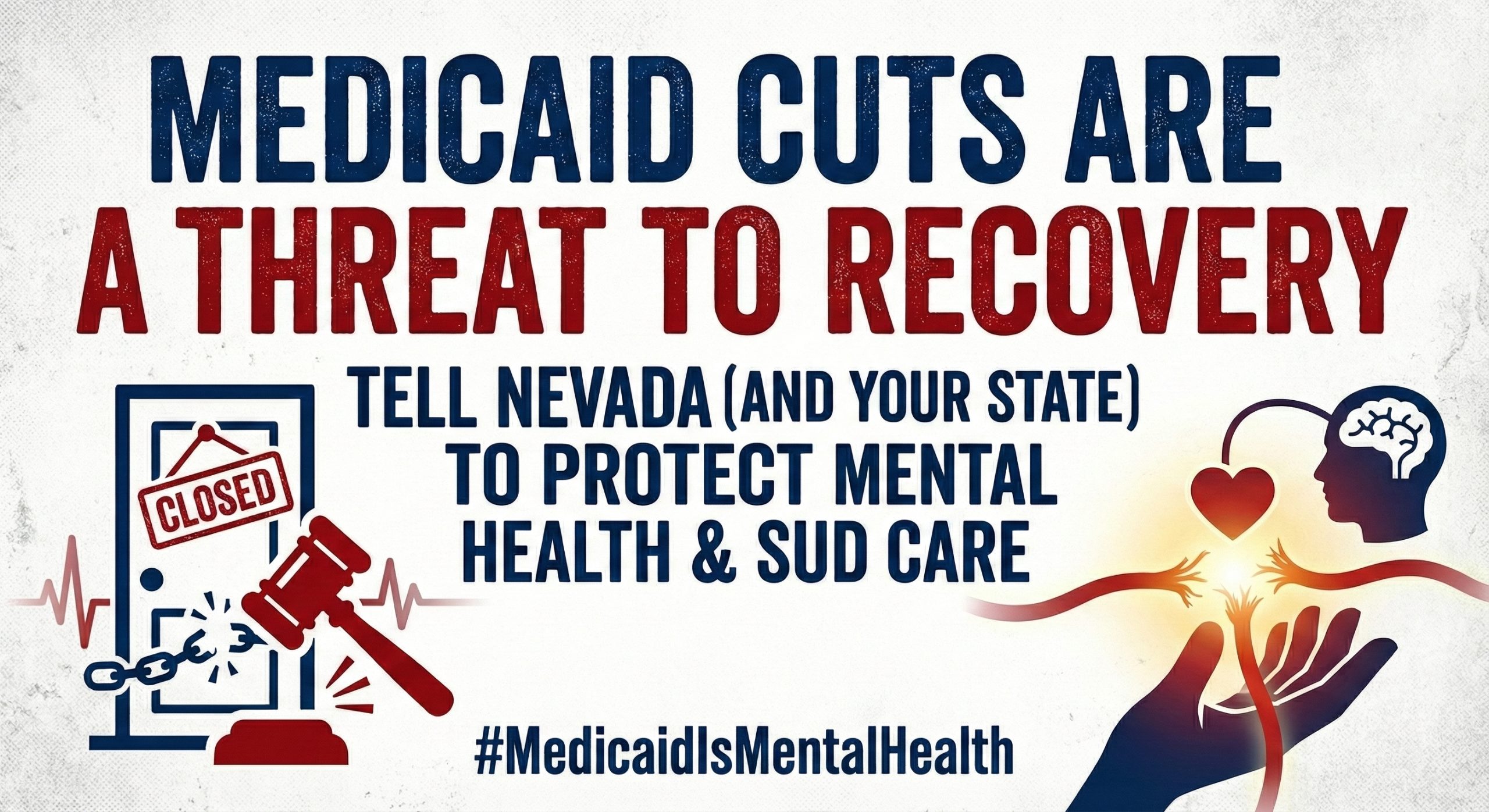
Our Lifeline is Under Attack. Why Nevada (and Every State) Must Fight for Medicaid.
Hey everyone, Ryan here. I’m writing to you today from my home in Nevada, a place I love, but also a place where I see the reality of the addiction and mental health crisis every single day. If you’ve followed my work for a while, you know I don’t mince words: recovery isn’t just about "willpower"—it’s about access. It’s about having a door that’s open when you’re finally ready to walk through it. For millions of us, that door is Medicaid. Right now, that door is being kicked shut. With the recent passage of H.R. 1 and the massive changes coming to Medicaid, we are facing an existential threat to the backbone of the American behavioral health system. Medicaid isn’t just "insurance"—it is the single largest payer for mental health and substance use disorder (SUD) services in this country. It covers 1 in 5 Americans and pays for a staggering 40% of all addiction treatment and 25% of all mental health care nationwide. If we lose Medicaid, we lose the ground we’ve gained in the fight against the overdose epidemic. Period.
To understand what’s at risk, look at what’s happening here in Nevada. According to recent data from Inseparable, our state is on the front lines of this crisis. Nevada currently ranks 5th worst in the nation for mental health services, and we are already struggling to keep our heads above water. The reality is that over 811,000 Nevadans—nearly a third of our state—are covered by Medicaid. One in three Nevadans living with a mental illness rely on this program for their care, and in a single year, over 51,000 Nevadans were treated for a substance use disorder through Medicaid. This is a federal lifeline; Nevada receives $4 billion in federal support for Medicaid, which covers 77% of our total Medicaid spending. If H.R. 1’s cuts and work requirements go into full effect without a fight, Nevada cannot simply "find the money" to fill that $4 billion hole. We are talking about tens of thousands of people in my backyard losing their therapists, their medications, and their recovery coaches. When people lose coverage, they don’t just "get a job"—they get sicker. They end up in our ERs, our jails, and our morgues.
We aren't just going to sit back and watch this happen. While the federal landscape is shifting, our states have the power to protect us. We must demand that our governors and state legislators take immediate action to shield the most vulnerable. First, states should automate exemptions by using SNAP data to identify people with mental health and SUD conditions, removing the administrative hurdles that often lead to a loss of care. We must also demand that states define "medically frail" broadly to include substance use disorder and serious mental illness by default, ensuring these individuals are exempt from work reporting rules. By partnering with Managed Care Organizations, states can leverage existing data to identify at-risk individuals and prevent "administrative churn" where people lose coverage simply because of lost paperwork.
Furthermore, we need to push for the creative use of Section 1115 waivers to expand the continuum of care and provide essential housing and nutrition supports. This is also the time to protect the reentry population by ensuring that folks returning home from prison or jail have Medicaid active on day one, which is the most critical window for preventing overdose. This is a fight for our lives. They want us to think this is just "policy" or "budgeting," but it’s a choice about who lives and who dies. Eighty-two percent of Americans oppose cuts to Medicaid because they know someone whose life was saved by it. I’m calling on my fellow Nevadans and advocates across the country to call your Medicaid directors and your governors. Tell them that Medicaid is mental health and that we expect them to use every tool available to protect our care. We are the recovery community, we are millions strong, and we are not going back to the shadows.
In solidarity,
Ryan